


There is a story most of us have been told - quietly, repeatedly, and with the best intentions.
It sounds like this: "Diabetes runs in my family." Or: "My mother had anxiety, so I probably will too." Or simply: "I have bad genes."
It is a story that feels truthful because it comes from people we trust - parents, doctors, well-meaning relatives leaning across dinner tables. And it is a story that has shaped how millions of people relate to their health - passively, fatalistically, with a quiet resignation that the outcome is already written.
Here is what decades of peer-reviewed science, half a million data points, and the world's leading research institutions want you to know:
That story is largely wrong.
And the correction isn't just academic. It is one of the most liberating findings in the history of human health.

The Question That Built Lifed
Lifed was born inside the corridors of JIPMER - the Jawaharlal Institute of Postgraduate Medical Education & Research in Pondicherry. In that hospital, two founders watched something that refused to leave them: people arriving broken, being carefully put back together, and then leaving without the tools to live any differently.
The question that emerged was simple and devastating: Why do we wait until people break before we try to help them?
That question sent them into the research. And the research sent them here, to one of the most consequential findings in modern science.
What the Science Actually Says
In February 2025, researchers at Oxford Population Health published a landmark study in Nature Medicine, one of the most rigorously peer-reviewed journals in the world. Their dataset was extraordinary: nearly 500,000 participants from the UK Biobank, assessed across 164 environmental factors and comprehensive genetic profiles, mapped against 22 major diseases.
Their conclusion was unambiguous.
Environment explains 17% of the variation in mortality risk. Genetics explains less than 2%.
That is not a rounding difference. Environmental and lifestyle factors carry more than eight times the predictive power over your risk of dying than your entire genetic makeup. The top drivers of biological aging and premature death were not rare genetic mutations. They were:
- Smoking
- Socioeconomic conditions and living environment
- Physical inactivity
- Diet quality and alcohol consumption
- Housing and social isolation
Every single one of those is modifiable. Every single one is, in the language of science, within your sphere of influence.
This wasn't a lone finding. Penn State College of Medicine researchers, publishing in Nature Communications, found that previous studies had systematically overstated genetic contributions to disease risk. When their model properly accounted for environmental effects, the estimated genetic contribution to Type 2 diabetes risk dropped from 37.7% to 28.4%. For obesity, genetic contribution fell from 53.1% to 46.3%, meaning a larger share of both conditions is driven by how we live, not what we inherited.
The 80/20 principle that Lifed is built on - that roughly 80% of health outcomes are shaped by environment and lifestyle, while genetics accounts for around 20%, and is not a motivational slogan. It is the scientific consensus, arriving from multiple directions at once.
The Concept That Rewrites Everything: Epigenetics
If the Oxford study is the headline, epigenetics is the mechanism - the biological explanation for why your daily choices matter so profoundly.
Here is the elegant truth at the heart of it: Your DNA is not a fixed sentence. It is a conversation.
Your genome - the complete set of genetic instructions in every cell of your body contains roughly 20,000 genes. But at any given moment, only a fraction of those genes are actively expressed. The rest are switched off. What determines which genes are on and which are off? In large part: your environment, your lifestyle, and your daily behavior.
This is the science of epigenetics - literally meaning "above the genome." The epigenome is a layer of cellular material that sits on top of your DNA and acts like a dimmer switch system for your genes. It doesn't change your genetic code. But it determines how that code is read.
And here is where it becomes personal.
A landmark review published in Frontiers in Nutrition (2025), conducted under rigorous PRISMA guidelines, examined lifestyle interventions and their epigenetic effects across 13 years of studies. Their finding: diet, exercise, mindfulness, and environmental exposure all drive measurable epigenetic changes — changes that alter how genes are expressed and directly impact the development or prevention of chronic disease.
Nature Communications research further confirmed that epigenetic changes triggered by lifestyle factors can influence cardiovascular function, metabolic health, inflammatory response, and even neurological function. These are not subtle shifts. They are changes at the molecular level that determine whether a genetic predisposition becomes a diagnosis - or remains dormant your entire life.
In plain language: a genetic predisposition is not a genetic inevitability. The gene for Type 2 diabetes does not guarantee Type 2 diabetes. The gene variant associated with heart disease does not write your cardiac story. Your lifestyle is in constant, active dialogue with your DNA, and that dialogue has far more editorial control than the gene itself.

The Arithmetic of a Longer, Better Life
The research doesn't just tell us that lifestyle matters. It tells us, with startling specificity, how much.
A 2024 longitudinal study published in JMIR Public Health followed 19,893 participants over 15.6 years in Taiwan. Researchers tracked adherence to five healthy lifestyle behaviors:
- Not smoking
- Avoiding excessive alcohol
- Sufficient physical activity
- Adequate fruit and vegetable intake
- Maintaining a healthy body weight
The results were remarkable. Individuals who adhered to all five behaviors lived an average of 7.13 additional years compared to those who followed none. But the finding that carries particular weight in a world increasingly concerned with healthcare costs: those five behaviors also produced a 28.12% reduction in lifetime healthcare expenditure.
Seven more years of life. Twenty-eight percent less spent on treating preventable illness.
These are not the outputs of a pharmaceutical trial. They are the outputs of how people chose to live.
The Global Wellness Institute's March 2025 analysis further reinforced this trajectory, concluding that for longevity specifically, lifestyle choices matter far more than genetic inheritance. This is the scientific foundation beneath every program on Lifed, every SMALL Habit designed, and every Healthmate certified on the platform.
Why We Got This Wrong for So Long
If the evidence is this clear, why has genetic fatalism persisted so powerfully in our culture? Three forces are at work.
The Availability Heuristic
Human minds remember dramatic stories. A celebrity who carries the BRCA gene and develops cancer. A marathon runner who collapses from a sudden cardiac event. These outliers become archetypes, memorable precisely because they are exceptions. The thousands of people who quietly transformed their health through consistent daily practice don't make headlines. Their story is invisible, even as it represents the statistical majority.
The Misuse of Heritability Data
When scientists report that a trait is "60% heritable," most people hear "60% genetic destiny." But heritability is a population-level statistic - it measures how much variation in a trait across a population can be explained by genetic differences between people. It says nothing about whether you, as an individual, can change your outcome through lifestyle change. The number was never about you. It was about a population average. And population averages have never lived your specific life.
The Comfort of Surrender
There is a quiet psychological relief in genetic determinism. If health outcomes are predetermined, then inaction carries no moral weight. You cannot fail at something that was never yours to control. But the data now makes this comfort costly. As Nature argued in a 2024 piece, “The view of biology often presented to the public is oversimplified and out of date”- and that oversimplification has real consequences for how people engage with their own wellbeing.
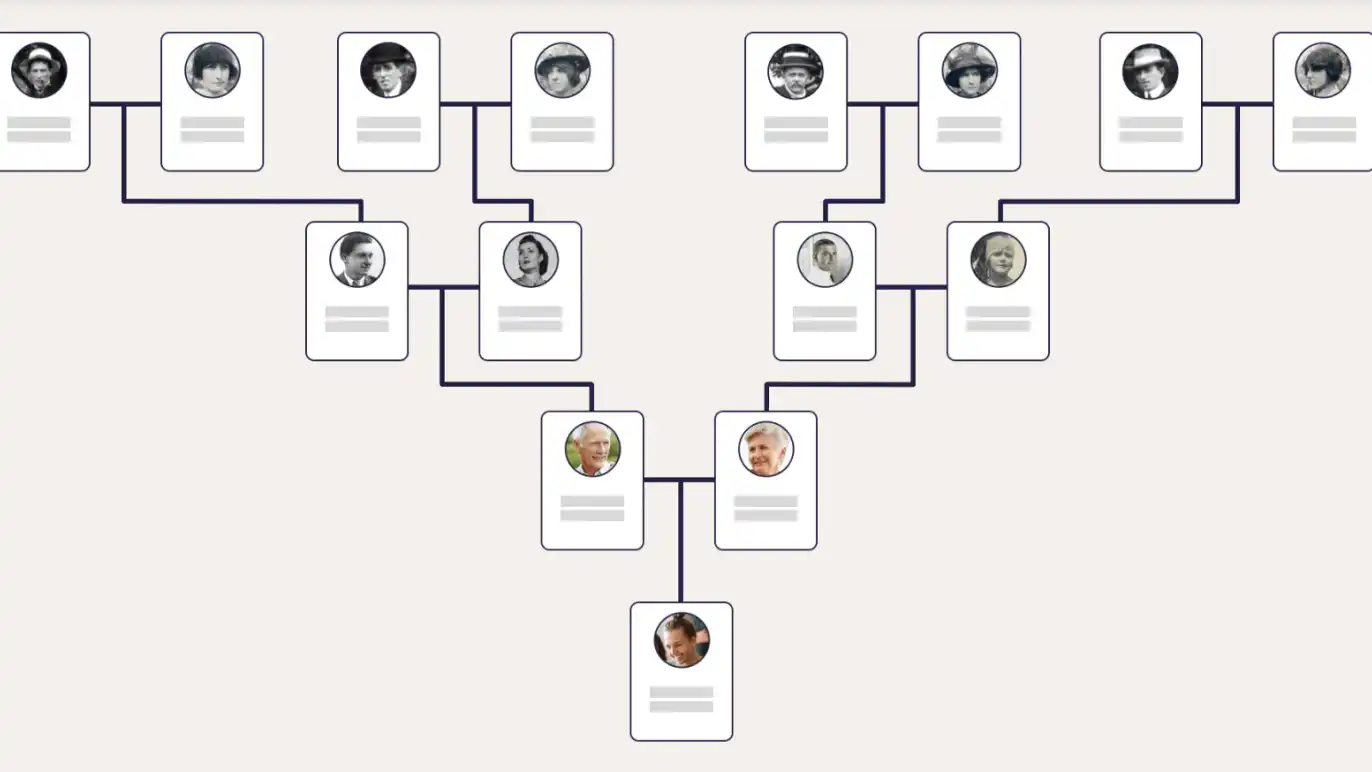
The Paradigm Shift: From Passenger to Pilot
Everything the research points to leads to a single, transformative reframe.
You are not a passive recipient of your biology. You are its most active author.
| The Old Story | The New Science |
|---|---|
| "My genes decide my health" | Your daily choices shape how your genes are expressed |
| "I monitor health when something goes wrong" | Wellbeing is a daily practice, not a crisis response |
| "Wellness is for people with time and money" | Five behaviors. No prescription required. Seven extra years |
| "Fragmented apps for fragmented problems" | The whole person needs a whole ecosystem |
| "Medicine fixes broken bodies" | The most powerful medicine is the life you build before you break |
The Oxford data, the Penn State model, the JMIR longitudinal study, the Frontiers in Nutrition epigenetics review - they all arrive at the same place:
The majority of human health is not a fixed sentence. It is a daily vote.
The 80% Belongs to You
Here is the number that should change how you think about tomorrow morning.
Eighty percent.
That is the approximate share of your health outcomes - your energy, your longevity, your mental clarity, your emotional resilience, your risk of chronic disease - that is shaped not by what you were born with, but by how you live. The food you eat. The way you move. How you sleep. What you do with stress. The practices you build into the ordinary Tuesday.
The 20% - your genetic inheritance - is real. It matters for certain conditions, in certain contexts. But even there, the science of epigenetics tells us that lifestyle moderates expression. The 20% is the starting line. The 80% is the race.
And most people are running it without a strategy.
What Lifed Was Built to Do
This is the gap Lifed was designed to close.
Not another app asking you to track steps. Not another meditation timer. Not a marketplace of generic content built for average people with average needs.
Lifed is the infrastructure for the 80%.
A single, curated ecosystem where you can discover programs built by verified Healthmates - practitioners who have dedicated their lives to one domain of wellbeing. Where you can book live, real-world experiences across Wellness, Functional Movement, and Recovery. Where you can sustain transformation through SMALL Habits - neuroscience-backed daily micro-practices, designed for the ordinary Tuesday, the moment when every retreat feels like a distant memory.
Lifed's SMALL Habits were built on precisely the insight the research demands: that transformation doesn't happen in the peak moment of a workshop. It happens in the 10-minute morning practice. The breath before the meeting. The movement that replaces the cortisol spiral. The 90% user success rate in reducing stress and anxiety, and the 82% sustained habit formation post-program, are not marketing claims - they are the outputs of a methodology grounded in behavioral science and epigenetic principle.
The body of science behind this article - from JIPMER to Oxford to Nature Medicine to the Taiwan longitudinal study - all points in one direction: the most powerful intervention available to you is not a drug, a diagnostic, or a genetic test. It is a designed daily life.
Lifed exists to help you design it.
Key Takeaway
You are not your genes. You are the sum of how you eat, sleep, move, breathe, connect, and recover - every single day. Science has now confirmed what the body has always known: the 80% is yours. The only question is whether you're living it by design or by default.
Ready to start living the 80% with intention?
Explore Programs Built by Certified Healthmates →



The above article is something which is very very important to make aware of the current society who believes in myth and giving every negative credits to genes and history. But this made me more aware of 80/20 rule and their importance.
“An incredibly insightful and inspiring piece. It’s impressive to see how "LIFED" is grounding its vision in strong scientific evidence and translating it into something practical and impactful for everyday life. This article not only educates but also reflects the purpose and depth behind the platform—truly a meaningful step toward preventive and personalized wellbeing.” ✨